

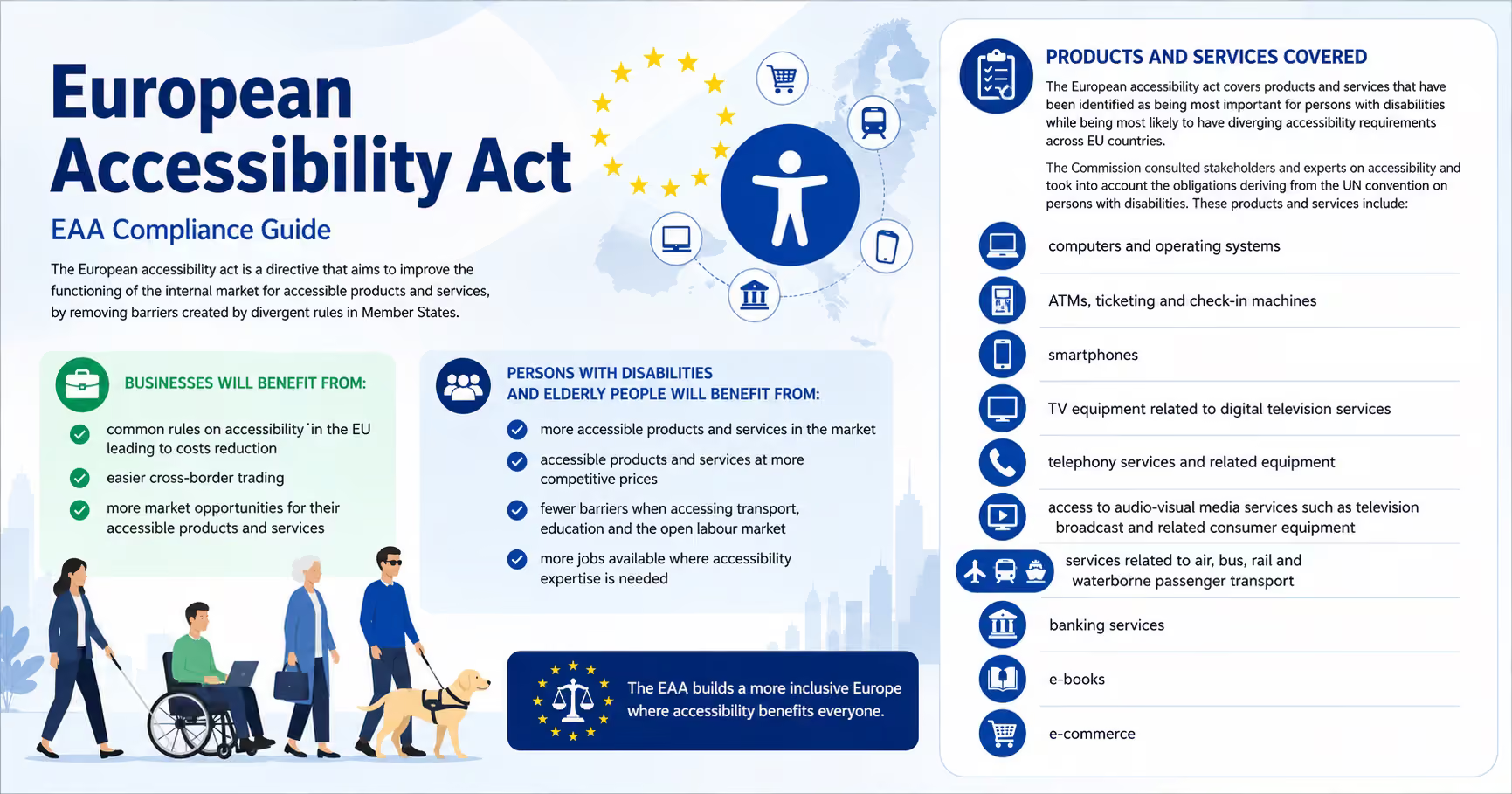
The European Accessibility Act has applied to covered products and consumer services placed on the EU market since June 28, 2025. A business does not escape the Act merely because it is headquartered outside the EU, but the Act also does not automatically cover every website that can be viewed from Europe.
Scope depends on the product or service, the way it is offered to EU consumers, national implementation, and available exemptions. Confirm legal scope with qualified EU counsel, then use our WCAG guide, accessibility checklist, or audit and remediation service to plan implementation.
What the EAA Covers
The European Commission lists covered products and services including:
- Computers and operating systems
- ATMs, ticketing machines, and check-in machines
- Smartphones and specified consumer terminal equipment
- Telephony and electronic communications services
- Access to audiovisual media services
- Certain air, bus, rail, and waterborne passenger-transport services
- Consumer banking services
- E-books and dedicated software
- E-commerce services
For a website team, e-commerce is often the most relevant category. The analysis should still begin with the actual service and customer journey, not a blanket statement that every marketing website is covered.
What Non-EU Businesses Should Assess
A business outside the EU should document:
- Which products or services are offered to EU consumers
- Whether the service falls within a covered EAA category
- The EU countries where the service is offered
- Its role as manufacturer, importer, distributor, or service provider
- Whether a microenterprise or other exemption may apply
- Which national laws and enforcement bodies are relevant
- Which parts of the digital journey are controlled by third parties
The location of a development team or hosting server is not a substitute for this analysis.
Microenterprise Exemption
EU guidance describes microenterprises as businesses with fewer than 10 employees and annual turnover or balance-sheet total not exceeding EUR 2 million.
Microenterprises providing services are exempt from the directive’s service requirements. That does not mean every small organisation can ignore accessibility:
- The thresholds and service role still need to be checked
- Product obligations differ
- Other EU or national accessibility and anti-discrimination rules may apply
- Enterprise customers may impose accessibility requirements contractually
- Accessibility remains important to users regardless of exemption
Do not publish a categorical exemption claim without confirming the legal facts.
WCAG, EN 301 549, and the EAA
WCAG provides testable requirements for web content. EN 301 549 is the broader European accessibility standard for information and communication technology.
For website implementation, WCAG Level AA is the core technical reference, but an EAA workstream may also need to address:
- Accessible information about the service
- Identification and authentication
- Customer support and accessibility information
- Electronic documents
- Real-time text or communication features
- Sector-specific functional requirements
- Documentation required by national implementation
WCAG conformance is therefore essential for many covered digital journeys, but it should not be marketed as a universal EAA certificate.
High-Priority Website Journeys
For an e-commerce or consumer-service audit, prioritise:
- Product discovery and search
- Product details and variation selection
- Cart and checkout
- Account creation and sign-in
- Payment and authentication
- Order confirmation and support
- Returns, cancellations, and complaints
- Cookie, consent, chat, and third-party widgets
- Terms, instructions, and downloadable documents
Test the complete task, not just isolated pages.
A Practical Audit Method
Define the scope
List representative templates, components, content types, documents, and third-party services. Record the countries and services included in the legal analysis.
Combine automated and manual testing
A credible accessibility audit includes:
- Automated rules across the agreed crawl scope
- Keyboard-only operation
- Screen-reader testing of representative journeys
- Zoom, reflow, and text-spacing checks
- Contrast and non-text contrast
- Form labels, validation, and status messages
- Media alternatives
- Accessible names, roles, and states for custom controls
Map findings to source components
Repeated scanner results often come from one shared template or component. Group findings by source and user impact so the remediation plan addresses root causes.
Retest and document
For each finding, record:
- Applicable criterion
- Affected user and task
- URL or component
- Reproduction steps
- Source-level remediation
- Retest status
- Remaining limitation or third-party dependency
Accessibility Statements and Feedback
An accessibility statement should accurately describe the evaluated scope, standard, date, known limitations, and contact route. It should not claim universal compliance when parts of the journey remain untested or depend on inaccessible third parties.
Provide a feedback channel that disabled users can operate and define who owns the response. Feedback should feed into the same defect and release process used for other production issues.
Avoid Instant-Compliance Claims
An overlay or widget cannot establish conformance across the underlying content, semantics, forms, custom components, documents, and complete user journeys.
In 2025, the US Federal Trade Commission required accessiBe to pay $1 million to settle allegations that it misrepresented the ability of its automated product to make any website WCAG compliant. While that enforcement action was in the United States, the technical lesson applies everywhere: accessibility requires source-level fixes and verification.
Read our detailed guide to accessibility overlays and code-level remediation.
How eLan Technology Helps
Our EAA-oriented technical work can include:
- Scoping covered website and application journeys with your legal team
- WCAG 2.2 AA automated and manual testing
- Code-level remediation across commerce, content, and custom application stacks
- Retesting and criterion-level status reports
- Accessibility statement support
- Ongoing regression testing and team guidance
We provide technical accessibility services, not legal opinions or regulatory certification. Review our accessibility audit and remediation service or request an accessibility assessment.