

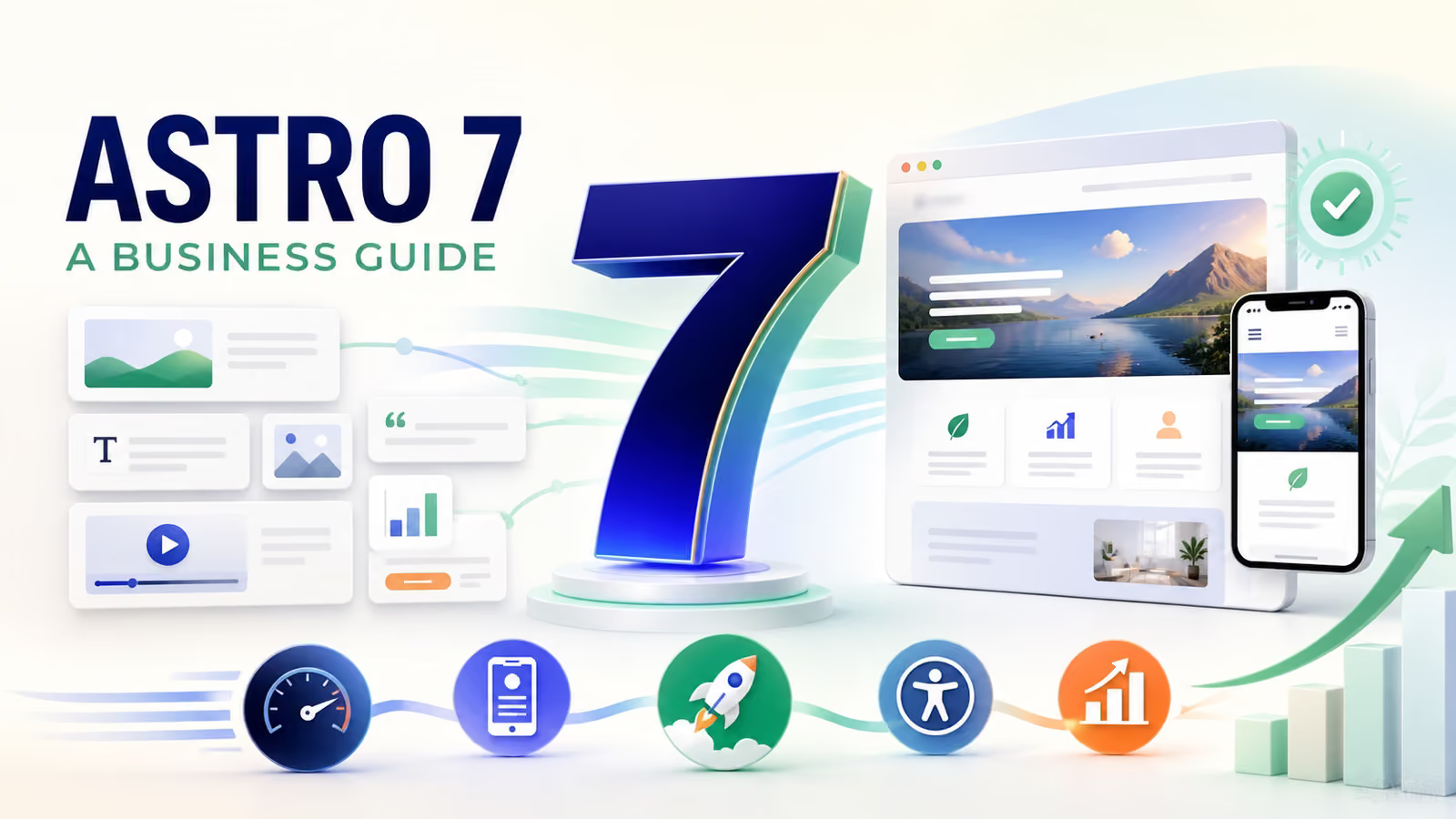
If you have heard a web agency mention Astro 7, the name can sound more complicated than it needs to be.
Astro 7 is simply a modern way to build a website. It is not a hosting company, a design style or an SEO shortcut. It is the technology developers use behind the scenes to assemble pages and deliver them to visitors.
Its main idea is practical: send people a useful page first, then load extra interactive features only where they are actually needed.
Astro 7 helps developers create fast, content-rich websites without making every page behave like a heavy web application. For a business owner, the potential benefits are a quicker visitor experience, cleaner technical foundations and more freedom over design and content. The result still depends on the quality of the design, development, hosting and ongoing maintenance.
A simple way to understand Astro
Think about a business website as a showroom.
Customers should be able to enter, see the important information and move around without waiting for the entire back office to start working. A good showroom is ready when the door opens.
Astro follows a similar approach. Most text, images, links and page structure can be prepared before the visitor arrives. Features such as a menu, enquiry form, filter, calculator or shopping interaction can then become active where required.
In web development, this approach is often described as server first or HTML first. A business owner does not need to remember those terms. The important point is that the visitor should not have to download and process unnecessary code just to read a page.
What does the number 7 mean?
The number identifies the current major generation of Astro. Astro 7 was released in June 2026 with improvements to the way developers build, organise and maintain websites.
Astro 7.1 and Astro 7.2 followed with further improvements, including more control over security settings and faster ways to update larger websites.
These changes are mostly important to the team building the site. A customer will not visit your website because it uses version 7. They will care because the page feels quick, works on their phone, answers their question and makes the next step obvious.
That is the right way to judge any web technology: by the experience and business result it helps create.
Why should a business owner care?
1. Visitors do not like waiting
A slow website creates friction before your message has a chance to work. People may leave, abandon an enquiry or distrust a store that feels unresponsive.
Astro is designed for content-focused websites and sends very little browser-side JavaScript by default. Used properly, this gives the development team a strong starting point for speed.
The word “properly” matters. Oversized images, too many tracking scripts, slow hosting or careless code can still make an Astro website slow. No framework can rescue poor implementation by itself.
2. Mobile users get a lighter experience
Many customers browse on mobile networks and mid-range phones. They should not receive desktop-sized images or large amounts of code they never use.
An Astro website can serve responsive images and keep unnecessary browser work low. This can make pages feel more comfortable on mobile, particularly for service pages, blogs, portfolios and campaign landing pages.
3. Search engines receive clear page content
Important content can be present in the page from the beginning, including headings, descriptions, links and structured information.
That supports good technical SEO, but it does not guarantee a top Google position. Search visibility still depends on whether the content is genuinely useful, whether the site answers real searches, whether other trusted sites mention it and whether the overall experience deserves to rank.
Astro provides a foundation. SEO work builds on it.
4. Design is not tied to a template
Astro does not force a business into a fixed visual theme. A design can be created around the brand, customer journey and content instead of being squeezed into a pre-built template.
This is useful for businesses that want a distinctive website, clearer storytelling or a more considered mobile experience.
5. The website can grow in a structured way
Services, locations, articles, team profiles, projects and FAQs can be organised as reusable content. This helps keep a growing website consistent.
For example, a company can add a new project to its portfolio without rebuilding the card design each time. The content changes, while the design rules remain controlled.
Does Astro mean the website cannot be interactive?
No. This is a common misunderstanding.
Astro can support:
- Enquiry and quote forms
- Search and filtering
- Booking tools
- Calculators
- Maps and videos
- Customer accounts
- Product catalogues and carts
- Live data from other systems
- React, Vue, Svelte and other interactive components
Astro calls these focused interactive areas “islands.” The name is less important than the outcome: the website can remain lightweight while selected parts provide richer behaviour.
For content that changes for each visitor, Astro also supports on-demand rendering and server islands. These options let developers keep most of a page fast while handling personalised or frequently changing sections separately.
Can your team update an Astro website?
Yes, but the editing experience must be planned.
Astro itself is not a content management system. It can work with a CMS that lets an authorised team update content through a familiar dashboard. It can also use carefully structured content files for sites managed by a developer or agency.
Before choosing a setup, decide:
- Who will publish new pages or articles?
- How often will content change?
- Does the team need previews and approvals?
- Who will manage images and documents?
- Should different users have different permissions?
- Who will maintain the system after launch?
The best technical choice is the one that suits the people who will actually use it.
Can Astro be used for eCommerce?
Yes. Astro can power the visible storefront while a commerce system handles the operational work behind it.
For example:
- Shopify can manage products, inventory, checkout and orders.
- Medusa.js can manage custom commerce flows, subscriptions and integrations.
- WooCommerce can continue to manage a WordPress-based store.
- Astro can provide a custom content and shopping experience in front of those systems.
This is often called headless commerce. It can be valuable when a brand needs a highly customised storefront or wants content and commerce to work together more closely.
It also adds integration work. A standard Shopify or WooCommerce theme may be the better business decision when it already meets the store’s needs. We recommend headless commerce only when the benefit justifies the extra responsibility.
Explore our custom eCommerce services for a clearer comparison of the available approaches.
Which websites are a strong fit for Astro 7?
Astro is particularly suitable for websites where useful public content drives enquiries, trust or sales:
- Corporate and service-business websites
- Portfolios and project showcases
- Blogs, publications and resource centres
- School, college and institutional websites
- Healthcare and professional-service websites
- Tourism and hospitality websites
- Product catalogues
- Marketing sites connected to Shopify or Medusa.js
- Multi-location and international websites
- Campaign and landing-page systems
It can also support more complex experiences, but the architecture should follow the requirement rather than the popularity of a framework.
Astro, WordPress, Shopify or a custom application?
These platforms solve different problems. One is not automatically better than the others.
| Option | Often suits | Main consideration |
|---|---|---|
| Astro 7 | Fast, custom, content-led business websites | Editing and integrations should be planned around the team |
| WordPress | Familiar content management and a wide plugin ecosystem | Themes and plugins need careful performance and security maintenance |
| Shopify | Managed online stores that need dependable commerce operations | Custom storefront requirements can move beyond a standard theme |
| Medusa.js | Businesses with custom commerce rules and greater platform ownership | Requires an experienced development and maintenance team |
| Custom application | Logged-in tools and workflows unique to the business | Higher planning, testing and long-term ownership needs |
Sometimes the right answer is a combination. An Astro website may use a headless CMS for content and Shopify for checkout. A marketing site and customer portal may also use different technologies because they have different jobs.
Is an Astro website more expensive?
There is no single Astro price. Cost depends on the work involved, including:
- Custom design
- Number and complexity of pages
- Content migration
- CMS setup
- Forms and third-party integrations
- eCommerce requirements
- Accessibility work
- SEO migration and redirects
- Testing and launch support
- Ongoing maintenance
A small, well-defined Astro site can be straightforward. A large multilingual site with custom integrations will naturally require more planning.
Ask for a proposal that explains deliverables, ownership and maintenance rather than comparing only the initial build price. A cheap launch can become expensive if the team cannot update the site or if every small change requires specialist work.
What should you ask a web agency?
You do not need to interview developers about code. Ask questions that protect the business outcome:
- Why does Astro fit our website better than the alternatives?
- How will our team update content after launch?
- What speed and accessibility testing is included?
- How will old URLs and search rankings be protected during migration?
- Which services, licences and third-party tools will have ongoing costs?
- Who owns the design, source code, content and accounts?
- What happens when Astro or an integration needs an update?
- How will forms, analytics and conversions be tested?
- What support is included after launch?
A trustworthy recommendation should explain both the advantages and the trade-offs in language you can evaluate.
Can an existing website move to Astro without losing SEO?
Yes, but a redesign or platform move needs an SEO migration plan.
The team should record existing URLs, identify pages that receive search traffic or links, preserve useful content and create permanent redirects where addresses change. Canonical tags, metadata, structured data, internal links, sitemaps and analytics should be checked before and after launch.
Changing technology is not a reason to discard years of search history.
How eLan Technology uses Astro
The eLan Technology website is built with Astro. We use it to manage service pages, location pages, portfolio entries, blog articles, structured data, responsive images and interactive elements within one consistent system.
We also rebuilt the Alessanddra Nirrwaan Photography website with Astro, using a custom approach suited to a visual portfolio. You can see it in our website portfolio.
Our experience has also shown us where Astro is not the only answer. We continue to work with Shopify, Medusa.js, WooCommerce and other platforms when they are a better fit for the business.
For a more technical view of the framework, read Astro 7 for Business Websites: Faster, Safer and AI-Ready Development.
The practical conclusion
Astro 7 is worth considering when your business needs a fast, custom and content-rich website. Its strength is not a trendy label. Its strength is the ability to deliver useful pages efficiently while adding interaction with purpose.
The decision should still begin with your customers, content, internal team and business goals. Technology comes after those questions.
If you are planning a new website or wondering whether an existing one should be rebuilt, explore our web development services or request a quote. We will recommend the simplest approach that meets the real requirement.